
.svg)


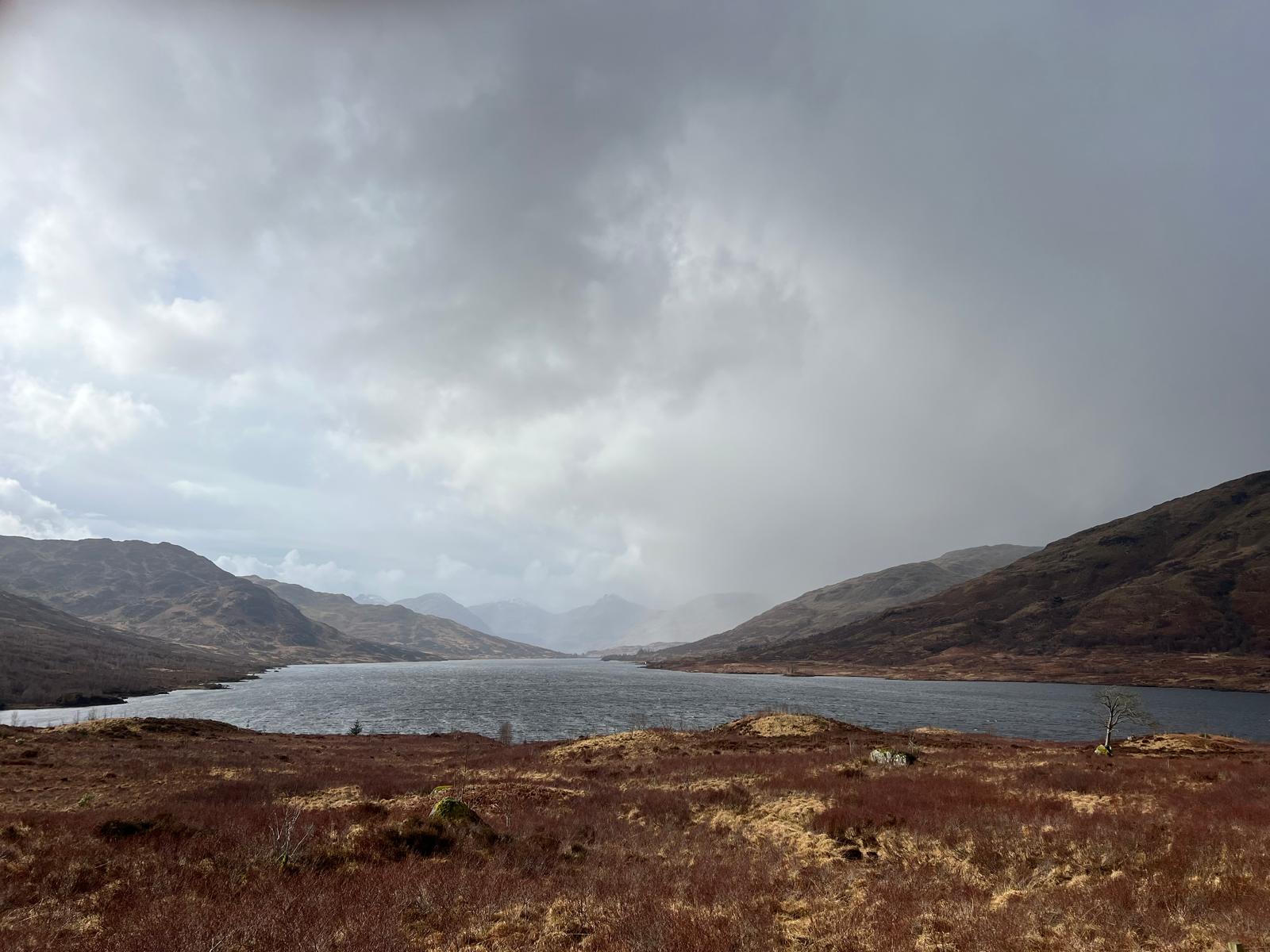
The Scottish Highlands have a way of whispering promises of epic adventure, even when the forecast is doing its best impression of a grumpy weatherman. A few weeks ago, I found myself back in that embrace, specifically in the heart of the Trossachs, reunited with a motley crew of old friends. These were the kind of friends you forge in the crucible of shared experiences, specifically, living and working in the humid, chaotic, and utterly brilliant embrace of Thailand back in my twenties. Now, instead of dodging tuk-tuks, we were navigating the more serene, if occasionally soggy, delights of central Scotland from our cosy base at Willow Cabin.
The weather, as is tradition in these parts, was performing a dramatic ballet of "patchy with bands of heavy showers." A true Scottish welcome, ensuring we appreciated every ray of sunshine even more. But a little rain never dampened our spirits, especially when the promise of a grand Trossachs tour lay ahead. Our plan was simple: immerse ourselves in the rugged beauty, the whispers of history, and perhaps, a few well-earned cups of tea.
Our journey began by heading east, hugging the southern shore of the shimmering Loch Venachar. The loch, a tranquil expanse reflecting the ever-changing sky, soon led us to a rather unassuming yet historically significant landmark: the humpback bridge over the Eas Gobhain river. This isn't just any old bridge; oh no. This humble stone arch gained a fleeting moment of cinematic glory in Alfred Hitchcock's iconic 1935 thriller, "The 39 Steps." For those who haven't seen it, or perhaps need a refresher, it features a memorable car chase and crash scene right here. Watching it again, after having stood on that very bridge, is a fascinating exercise in time travel. The landscape back then was surprisingly sparser, a testament to how quickly nature reclaims and redefines its own canvas. It makes you wonder if Hitchcock himself, peering through his camera lens, ever imagined the trees would one day grow so enthusiastically as to obscure his dramatic backdrop. Or perhaps he just thought, "More drama, less foliage!"
Crossing the bridge, we soon arrived at a T-junction, a crossroads not just geographically, but historically. Dead ahead, looming with an ancient, silent gravitas, was Dunmore Hill Fort. A testament to Iron Age ingenuity, it sits atop a prominent hill, offering commanding views that, even today, make you appreciate the strategic minds of our ancestors. They certainly knew how to pick a prime piece of real estate. A mile further towards Callander, hidden somewhat by the passage of millennia, lies the ghost of a Roman Fort. It's a subtle reminder that even the mighty Roman Empire, with all its legions and roads, once ventured into these wild lands, perhaps finding the weather just as 'character-building' as we did. One can almost picture a weary Roman centurion, eyeing the distant peaks and muttering about the lack of central heating.
Our compass, however, pointed us towards Brig O’Turk and the hallowed grounds of "Ruskin Country." John Ruskin, the Victorian art critic, social thinker, and all-round intellectual powerhouse, found immense inspiration in this corner of the Trossachs. We parked the car, donned our waterproofs (a truly essential part of any Scottish wardrobe), and embarked on a walk up to the impressive Glen Finglas Dam. The dam itself is a modern marvel, but it's the natural beauty surrounding it that truly captivates, particularly Ruskin's Waterfall. It's a place where the sheer force of nature tumbles gracefully, a symphony of water and stone that, even on a grey day, sparkles with an undeniable charm. Ruskin, with his keen eye for natural beauty and moral truth, would surely have approved of its enduring wildness.
It was here, nestled amongst the ancient trees, that we sought out another local legend: the Bicycle Tree. The story, a poignant blend of local folklore and wartime tragedy, tells of a young man from the village who, over a century ago, left his bicycle propped against a sapling before heading off to fight in the First World War. He never returned. The tree, in a silent act of remembrance, grew around the bicycle, slowly engulfing it and lifting it higher and higher, until it was suspended some 15 feet in the air, a metallic ghost in the leafy canopy. Sadly, and as a stark reminder of the passage of time, the Bicycle Tree has now fallen. It’s a bittersweet moment, seeing the remnants of the legend lying on the forest floor. Yet, even in its fallen state, the story persists, a touching tribute to a lost generation and nature's slow, inexorable embrace. It makes you wonder what other secrets these ancient woods hold, patiently waiting to be discovered.
Our journey continued along the shores of Loch Achray, a narrower, more intimate loch, before opening out onto the magnificent Loch Katrine. This, without a doubt, is the jewel in central Scotland’s crown. Its waters are pristine, its shores rugged, and its beauty legendary, largely thanks to Sir Walter Scott’s epic poem, "The Lady of the Lake." As we drove, we passed the old Trossachs Hotel, now transformed into a timeshare called Tigh Mhor. It’s a rather imposing Scottish Baronial pile of bricks, a grand Victorian edifice that once welcomed distinguished guests, including Queen Victoria herself. Now, it stands as a testament to changing tastes and the enduring appeal of a good holiday home, albeit one with a rather formidable facade.
A little further on, we took a right up to the pier at Loch Katrine, a bustling hub where visitors gather to board the historic paddle steamer, the SS Walter Scott. Named, of course, after the poet who put this area on the literary map, this elegant vessel has plied the waters of the loch for over a century, offering leisurely cruises amidst breathtaking scenery. Imagining the scores of Victorians, crinolines rustling and top hats gleaming, embarking on the same journey, adds another layer of charm to the experience.
But we were in for an even more exclusive treat. Through a stroke of luck and the generous permission of one of the residents, we were granted access to a private road – a 14-mile stretch of single track that wound its way into one of the most stunning and secluded glens in Scotland. This road, usually reserved for residents and essential services, felt like a secret passage to paradise. The landscape here is a strange and utterly captivating mix of rugged grandeur and high Victoriana. On one side, the majestic Eilean a' Chait (Cat Island) sits sentinel in the loch, while the imposing Ben Venue dominates the skyline. Then, as we rounded a bend, a wonder view of the Arrochar Alps unfolded before us, their craggy peaks a dramatic backdrop to the shimmering waters. It’s the kind of scenery that makes you involuntarily gasp, even if you’ve seen countless Scottish vistas before.
At the far end of this glorious drive, nestled amidst the mountains, lies Glen Gyle, the ancestral home of Scotland’s most famous outlaw, Rob Roy MacGregor. A figure of myth and legend, a cattle rustler turned folk hero, Rob Roy's spirit undeniably permeates these hills. You can almost hear the echoes of clan feuds and daring escapes carried on the wind. It’s a place that feels wild and untamed, a fitting backdrop for a man whose life was as dramatic as the landscape itself. Further along, we reached Stronachlachar, a small pier and settlement where, thankfully, you can stop and have a much-needed cup of tea, reflecting on the sheer majesty of it all.
Here, we rejoined the public road, which, to our delight, continued its scenic meander along the tranquil Loch Arklet. This smaller, less frequented loch offers a sense of peaceful isolation, a moment of calm before the dramatic reveal of Scotland’s most famous body of water. Soon enough, the road descended, opening up to the vast, sparkling expanse of Loch Lomond. This is where the landscape truly takes on an epic scale, a sprawling canvas of water, islands, and towering mountains.
Our destination was the remote and isolated Inversnaid Hotel, perched dramatically on the eastern shore of Loch Lomond. This historic hotel, accessible by road, ferry, or, most famously, by foot along the West Highland Way, is a haven for weary travellers. We savoured some much-needed refreshments, warming our hands on hot mugs and watching the stream of hikers making their way along that challenging stretch of the West Highland Way. They appeared, one by one, from the misty trails, some mud-splattered and stoic, others looking utterly delighted to seek refuge from the next inevitable shower. You could practically see the thought bubbles above their heads: "Hot tea! Dry socks! A chair!" It’s a testament to the enduring appeal, and occasional hardship, of walking Scotland’s iconic long-distance paths. We shared a knowing glance – we might be driving, but we understood the lure of the wild, and the absolute joy of a warm, dry respite.
After our pit stop, feeling refreshed and invigorated, we began our homeward journey. The public single track road wound its way along the shimmering shores of Loch Chon, a captivating loch known for its dense woodlands and sense of secluded beauty. Then, it was onto Loch Ard, another stunning expanse of water, leading us to the charming and pretty village of Aberfoyle. Aberfoyle, often referred to as the gateway to the Trossachs, is a delightful place, steeped in folklore and history. It's said to be the home of the Faerie Knowe, a magical hill where, according to legend, fairies and goblins reside. While we didn't spot any mischievous sprites, the village certainly possesses a whimsical charm, a perfect blend of natural beauty and quaint Scottish village life.
From Aberfoyle, our route took us over the famous Duke’s Pass, a magnificent scenic road carved through the ancient forests by the Duke of Montrose in the 19th century. This winding ascent offers breathtaking panoramic views over the surrounding lochs and glens, a true feast for the eyes. We then embarked on the Three Lochs Drive, a circular route that showcases the beauty of Lochan Reòidhte, Loch Drunkie, and Loch Achray, each with its own unique character. The light was beginning to soften, casting long shadows over the hills, painting the landscape in hues of gold and purple.
Finally, we made our way back to Brig O’Turk, completing a grand loop through this spectacular region, before circling back around the familiar shores of Loch Venachar to our cosy Willow Cabin. The Trossachs had once again delivered an unforgettable experience. It was a journey filled with cinematic history, ancient legends, literary connections, breathtaking vistas, and the simple, profound joy of shared adventure with old friends. The weather might have been patchy, but the memories forged were anything but. And as for the bicycle tree, well, it might have fallen, but its story, like so many others in these ancient hills, will continue to grow, embraced by the enduring magic of the Trossachs.
...


